Security
Agentjacking and the AI Worm: Segment the Dev Workstation
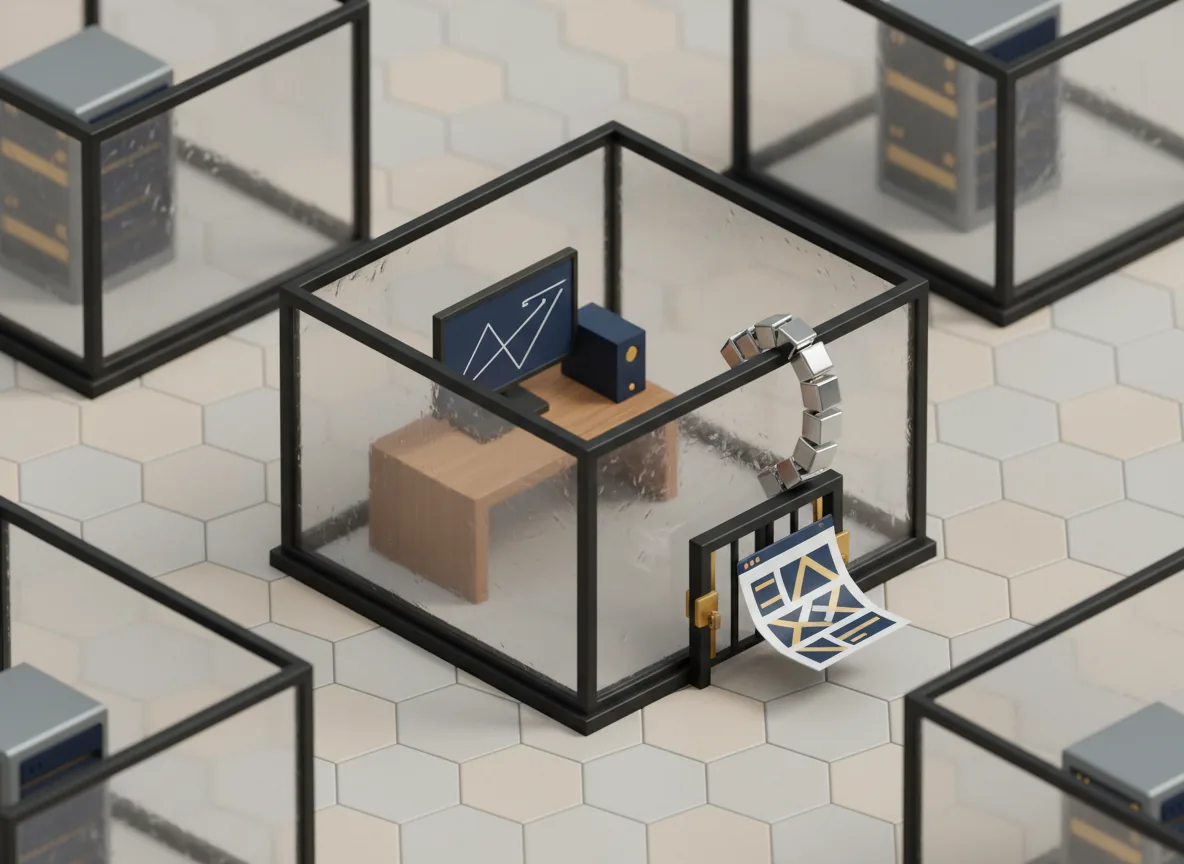
The two scariest AI-security stories of June 2026 both land on the same box, and it is not a server. It is the developer workstation. First came agentjacking, demonstrated as the AutoJack technique: a single crafted web page can hijack an AI coding agent into running an attacker's code on the host it sits on. Then researchers published a self-replicating AI worm that spreads through a network with no cloud API at all, reasoning its way from machine to machine on a model it runs locally. Neither is exotic to anyone who has spent a career segmenting networks. Both are the endpoint-and-segmentation problem you already know, turned up to a setting it has not been at before.
The uncomfortable shift is what the dev workstation has quietly become. It is no longer a laptop that reads email and pushes code. It is a privileged, internet-facing, agent-driven host that holds credentials, has a network path to production, and now takes instructions from whatever content its agent happens to read. Defenders have a name for a box like that, and it is not "endpoint." It is a high-value asset that belongs in its own zone.
Agentjacking: the web page is the payload now
An AI coding agent reads the web as part of its job: documentation, stack traces, package pages, error telemetry. Agentjacking weaponises that. The AutoJack work showed that a single malicious page, once the agent ingests it, can cross from untrusted content into command execution on the developer's host. It is prompt injection with a host-execution payoff, and the payoff is large because of where the agent lives. That machine frequently holds SSH keys, cloud tokens, and a working route to production. A web page two hops from your crown jewels is a very different risk than a web page in a sandboxed browser tab. I set out the full set of these failure modes in the AI agent security threat model; agentjacking is that model arriving on the workstation.
The AI worm that needs no API
The second story removes the comfortable assumption underneath most 2025 AI-threat advice. University researchers built and tested a self-replicating worm that runs an open-weight language model locally to reason its way through a network: it profiles each host it reaches, generates a tailored attack strategy, gains access, and replicates, with no human direction and no call to any commercial AI service. In a deliberately vulnerable test network of thirty-three hosts, it averaged around thirty-one vulnerabilities identified per run, elevated privileges on roughly twenty-three hosts, and spread to about sixty-two percent of the network over seven days. It funds its own reasoning by hijacking the GPUs of the machines it infects, and the low-powered devices it cannot run the model on simply route their queries upstream to an infected GPU node.
The detail that should change your mitigation list is the absence of an API. A great deal of last year's guidance reduces to "control access to the frontier models," choke the egress to OpenAI or Anthropic and you throttle the threat. A worm that carries its own model and runs it on stolen local compute never makes that call. The throttle the industry was quietly counting on is not there. What is left is the network.
This is a segmentation problem, not a new discipline
Strip the novelty and both threats assume the same precondition: a flat-enough network where a foothold on a developer's box can reach standing credentials, a path to production, and pools of GPU compute. That is the precondition network security has spent two decades dismantling, and the controls transfer directly.
- Treat the dev and agent workstation as a privileged zone. Not a trusted desktop on the user VLAN, a high-value host in its own segment. This is ordinary microsegmentation, applied to the box you have been under-classifying.
- Default-deny egress on the agent host. Let it reach the package registries and documentation it genuinely needs, and nothing else. Agentjacking's callback to the attacker's server and the worm's outbound spread both die against a closed egress, which is exactly what egress filtering is for.
- Isolate GPU compute. The worm's entire economy is stolen GPU. Segment your GPU nodes so an infected developer box has no route to them, and the worm loses the engine it runs on.
- Cut the lateral path to production. The workstation should not hold standing production credentials or an open route to prod. Apply the zero-trust change controls you already use for firewall rules to what this host is allowed to reach.
- Watch for the machine's tempo. Self-similar, machine-speed scanning and replication is a behavioural signal a human operator does not produce. Feed it into the same monitoring you run for threat intelligence on firewall teams.
Why network security is the load-bearing layer here
It is worth being precise about why the response sits with the firewall team and not only with model governance. Model governance is real and useful, but it acts at the API and the prompt. The local-model worm operates below that layer entirely, and agentjacking's damage is done on the host and the network, not in the model's answer. The controls that still bite, segmentation, egress, GPU isolation, credential scoping, behavioural monitoring, are network controls. The same point I keep making about agents holds here: when the model layer cannot be trusted to refuse, the boundary has to be the network. You can track that residual risk quantitatively, too, on the same risk register you already keep.
It is the same evidence your auditors want
None of this is a new compliance category. NIS2, DORA, and ISO 27001 already ask whether you know what each asset can reach, whether you can show least privilege, and whether you can produce an audit trail. The developer workstation and its agent are assets in scope, and right now in most organisations they are a flat desktop holding production credentials, which is a finding waiting to be written. A workstation that is zoned, egress-filtered, and monitored answers those questions with the same artifacts you generate for any segment, the way I lay out for NIS2 evidence.
Why it matters
The developer workstation was always a soft target. Agents and self-propagating AI have turned it into a high-value, internet-drivable one, and the two June demonstrations are the proof of concept. You do not need a new playbook for this. You need to take the box you have been treating as just a laptop and put it behind the firewall discipline you already run for everything else that holds the keys: its own zone, tight egress, no standing path to prod, isolated compute, and eyes on its behaviour.
If you want a second pair of eyes on where AI agents and developer tooling now sit inside your network and compliance scope, that is exactly what the readiness check below is for.