Thought Leadership
Gartner Now Ties the Firewall to Its Management Plane. Your Renewal Is a Change-Plane Decision
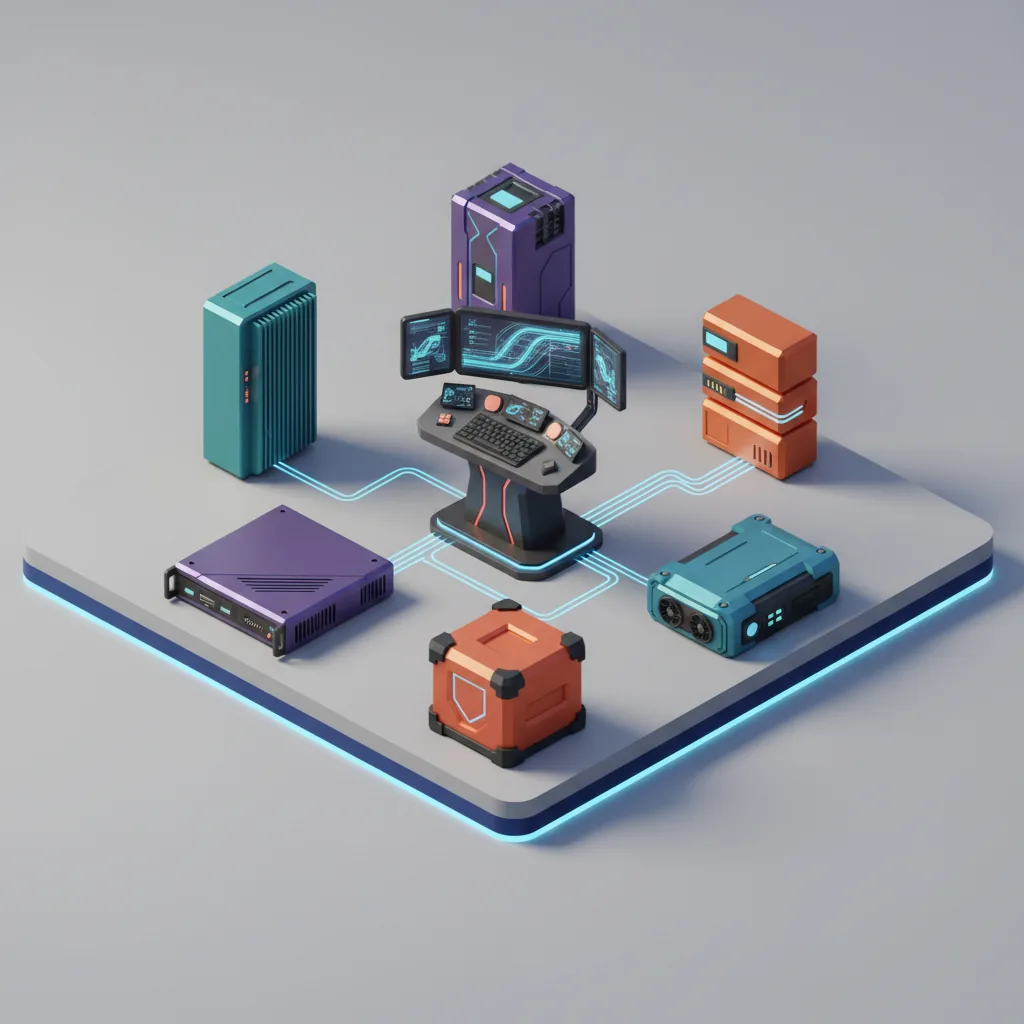
Gartner published the second edition of its Magic Quadrant for Hybrid Mesh Firewall on 7 September 2026. The category, which Gartner introduced in August 2025, defines a hybrid mesh firewall as a model that spans "hardware, virtual appliances and cloud-based options, all managed through a unified, cloud-based management plane", in the wording quoted by Palo Alto Networks. In our view that definition moves the weight of a firewall renewal from the box to the console, where every firewall change is written, approved and recorded.
Three vendors announced Leader status in the 2026 edition, each in its own release: Palo Alto Networks, which says it was "positioned furthest for Completeness of Vision", Fortinet, which says it was "positioned highest for Ability to Execute for the second consecutive year", and Check Point. The full report sits behind Gartner's paywall and we have not read it, so this post makes no claim about any other vendor's 2026 position.
What is a hybrid mesh firewall, according to Gartner?
A hybrid mesh firewall, in Gartner's definition, is one firewall model deployed as hardware, virtual appliances and cloud services, all run from a single cloud-based management plane. The first half describes estates most enterprises already operate. The second half is the new requirement, and it is the half that decides what a firewall renewal commits you to.
The name change is recent. Gartner's Magic Quadrant for Network Firewalls of 19 December 2022 evaluated 17 vendors. The first Hybrid Mesh Firewall edition is dated 25 August 2025, and the second followed on 7 September 2026.
| MQ for Network Firewalls | MQ for Hybrid Mesh Firewall | |
|---|---|---|
| Edition | 19 December 2022 | 25 August 2025, then 7 September 2026 |
| Scope (title / definition) | Network firewalls | Hardware, virtual and cloud firewalls as one model |
| Management in the definition | Not in the title | "a unified, cloud-based management plane" |
| Vendors | 17 evaluated | 2025: Leaders Palo Alto, Fortinet, Check Point; Visionary Cisco; Challenger HPE (Juniper Networking); seven Niche Players |
| Leaders announced for 2026 | n/a | Palo Alto, Fortinet, Check Point |
The 2025 positions come from BankInfoSecurity's report of 29 August 2025. The 2026 Leaders come from each vendor's own announcement.
Why is the management plane now the product?
In our view, the management plane is now the product because the enforcement points are converging and the consoles are not. Gartner's 2025 edition points the same way. As reported by BankInfoSecurity, the report noted that "an increasing number of hardware renewal proposals include cloud firewall part numbers" and that "the maturity of HMF cloud managers varies greatly between the vendors."
Read those two lines together. The renewal you sign for appliances already carries cloud components, and the piece that differs most between vendors is the cloud manager. We think that is where firewall teams should spend their evaluation time. Inspection engines matter, but the console is where the change process lives: the object model, rule ordering, approval workflow, API, audit log and rollback.
The vendors describe their consoles in those terms. Palo Alto's 2026 Leader post says "Strata Cloud Manager provides unified policy, visibility and AI-driven operations across these enforcement points." Read as a buyer, that sentence describes a change plane.
Where does the lock-in move?
The lock-in moves from the appliance to the policy object model and the change history held in the vendor's console. Replacing hardware means translating rules once. Leaving a cloud manager means rebuilding the workflows, approvals, integrations and evidence trail that grew inside it, and that is a larger project than any rule conversion.
Across hundreds of migrations, the rules were rarely what hurt. Converters handle syntax. What did not travel were naming conventions, object hierarchies, dynamic groups fed by other systems, and the history of why a rule existed. When all of that lives in a vendor's cloud console, it takes the vendor's shape. Our migration failure taxonomy lists the classes of breakage, and most of them sit outside the rule base.
Cost is part of the same picture. Gartner's 2025 edition, as reported by BankInfoSecurity, warned that "clients are increasingly concerned about rising firewall renewal costs and have found that vendor consolidation does not always reduce expenses." Consolidating into one vendor's console can make the next price negotiation harder, because walking away now costs a change process, not a hardware refresh.
Geopolitics sharpens it. Huawei, H3C and Sangfor were among the 2025 Niche Players, per the same report. If a vendor in your estate becomes a geopolitical risk, the exit plan now has to cover the console and its records, not just the boxes.
What does it mean for a multi-vendor estate?
For a multi-vendor estate, a single-vendor cloud manager covers only part of the firewalls, so the definition Gartner rewards does not match the estate many enterprises actually run. As we read the definition, the quadrant rewards how well one vendor manages its own firewalls everywhere. It does not reward how well your organisation governs firewalls from several vendors at once.
Our answer is to keep the change process above the vendor consoles: one request, one approval, one evidence record, whichever console executes the change. Our multi-vendor firewall management guide covers the operating model. The quadrant should inform which vendor you buy. It should not decide your management architecture by default.
How does this land in NIS2 and DORA audits?
Under DORA and NIS2, a cloud management plane turns your firewall change evidence into data held by a supplier. That is manageable, but only if somebody decides it on purpose and writes down retention, export and exit terms before the first audit asks for them.
DORA Article 9(4)(e) requires financial entities to manage ICT change "in order to ensure that all changes to ICT systems are recorded, tested, assessed, approved, implemented and verified in a controlled manner" (Regulation (EU) 2022/2554). If those records live in a vendor's SaaS console, your proof of control depends on that vendor's retention period and export format. NIS2 Article 21(2)(d) adds "supply chain security, including security-related aspects concerning the relationships between each entity and its direct suppliers or service providers" (Directive (EU) 2022/2555). The cloud manager is now one of those service providers.
Our guides on NIS2 firewall evidence and DORA firewall compliance list what auditors ask for. Add one question to both: where does the change record live, and can you produce it without the vendor's console?
Where does AI fit into the console?
AI makes the console dependence deeper, because the automation Gartner expects will, in our reading, run inside the vendor's management plane. The 2025 edition, as quoted by BankInfoSecurity, said: "AI's greatest impact will be automating daily firewall tasks, such as change management and routine policy assessments."
We looked at what that means in practice when vendor AI started grading its own policy changes. The short version: an assistant that reviews changes inside the console it belongs to is useful, and it also makes the console harder to leave. Budget for both effects.
What should you ask before the next firewall renewal?
Before the next renewal, ask questions about the management plane, not about throughput. These six are the ones we would put to any vendor, Leader or not.
- Export: can we export the full policy, the object model and the change history in a documented format, on demand?
- Retention: where is the audit log stored, for how long, and what happens to it when the contract ends?
- Workflow: does the console's approval flow integrate with our ITSM, or does it become a second change system next to it?
- On-premises option: is a local manager still supported, and is a support end date published for it?
- Outage behaviour: if the cloud manager is unreachable, do enforcement points keep running, and can we make an emergency change and roll it back locally?
- Pricing: what does the management subscription cost on its own, separate from hardware and threat licences?
Why it matters
The renaming from network firewalls to hybrid mesh firewall reads like analyst vocabulary. In our view it records a real shift: the market now competes on who runs your change process. That puts the most consequential part of a firewall purchase in the console contract, where procurement rarely looks.
Could your team produce the last twelve months of firewall change approvals without logging into a vendor console? The free NIS2 Readiness Check walks through the evidence a firewall change process has to produce.
Gartner does not endorse any company, vendor, product or service depicted in its publications, and does not advise technology users to select only those vendors with the highest ratings or other designation. Gartner publications consist of the opinions of Gartner's business and technology insights organization and should not be construed as statements of fact. Gartner disclaims all warranties, expressed or implied, with respect to this publication, including any warranties of merchantability or fitness for a particular purpose. Source citation: Gartner, Magic Quadrant for Hybrid Mesh Firewall, Rajpreet Kaur, Adam Hils, Odie Adisana, 7 September 2026.