Security
MFA Bypass Is Routine. Your Firewall Is the Last Identity Control.
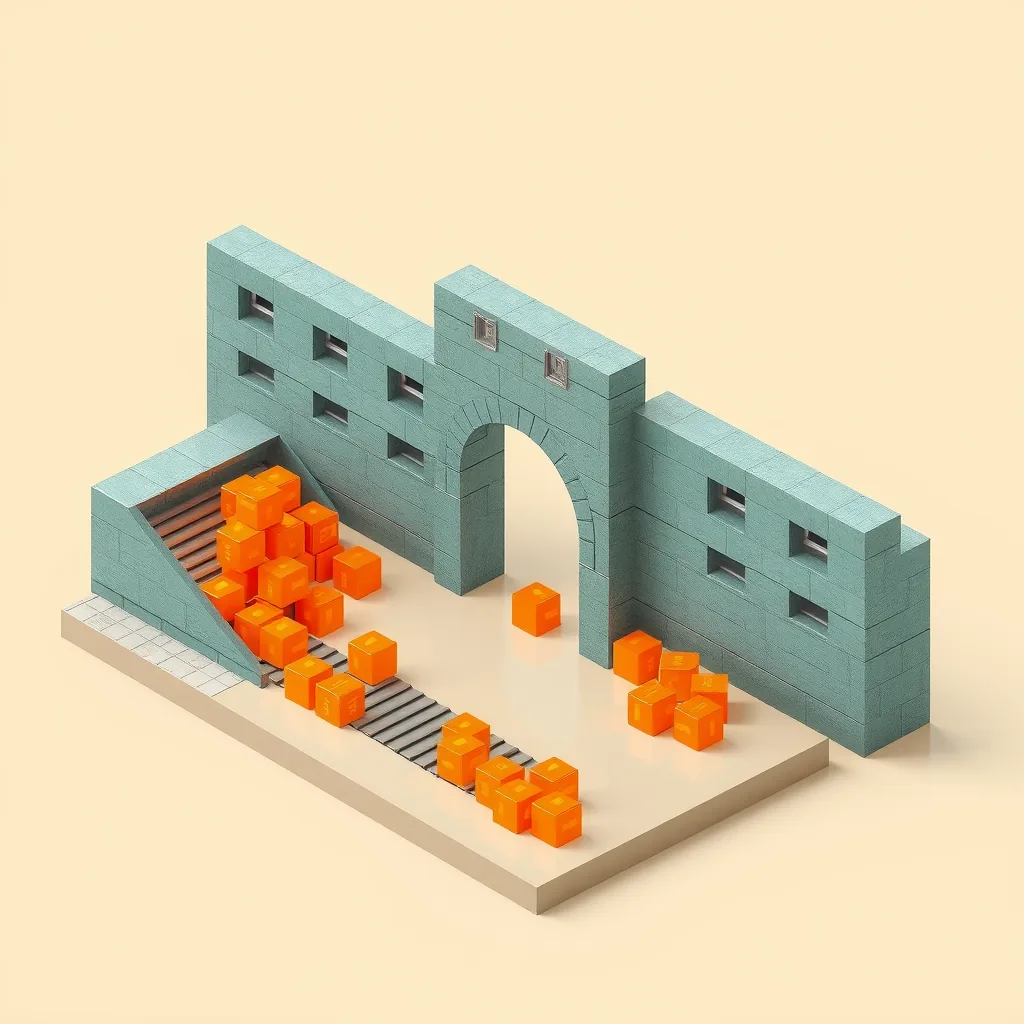
When sixteen billion credentials leak and stolen sessions walk straight past multi-factor authentication, the firewall stops being the boring perimeter and becomes the last control that still holds. Identity has quietly failed as a containment boundary: the attacker arrives holding a valid session, so the login succeeds and the second factor never fires. What remains under your control is the network. Egress filtering breaks the callback and the exfiltration the attack depends on, segmentation caps the blast radius, and firewall change management is what makes every emergency tightening defensible to an auditor afterwards.
This is not a call to abandon identity controls. It is a recognition of where the load now sits. In 2026 the credential is no longer the thing being stolen; the authenticated session is. That shifts the burden onto the layer that does not care whether a session is "legitimate", only whether traffic is allowed to leave and where it is allowed to go. For firewall teams, that is familiar ground, and it is the ground this post is about.
Why a stolen credential no longer trips the lock
The unit of theft moved up the stack. Attackers stopped chasing passwords and started lifting the authenticated session: the cookie or bearer token that proves the login already happened. That artifact lives past the multi-factor prompt, so replaying it skips authentication entirely. The roughly sixteen-billion-record compilation that Cybernews reported in 2026 was not one breach; it was an aggregation of infostealer logs, and infostealer logs capture session tokens alongside the passwords, which is the part that matters.
So multi-factor authentication keeps getting bypassed without anyone touching the second factor. An adversary-in-the-middle proxy, or malware reading a token off the host, captures the live session and reuses it. The login already passed, the token is valid, and the controls watching for failed logins or password changes see nothing because nothing failed and nothing changed. The detection that would have caught a brute force is blind to a replay. That is the gap the network layer has to cover.
What the firewall still controls when identity fails
A stolen session is powerful, but it still has to do something observable on the network, and that is where you regain control. The compromised session has to call home, move laterally, and ship data out, and every one of those steps crosses a boundary a firewall owns. The credential being valid does not make the traffic allowed.
- Egress filtering. Infostealers and session-replay tooling both depend on an outbound path to a command-and-control endpoint and a route to exfiltrate what they take. A default-deny egress policy that only permits known destinations turns a full compromise into a contained one. This is the same discipline covered in the firewall egress filtering guide, now reframed as your primary identity-failure control.
- Microsegmentation. A hijacked session inside one zone should not be able to reach the database tier, the management network, or the backup store. Microsegmentation decides how far a valid-but-stolen session can travel before it hits a wall it cannot talk through.
- Conditional and geo-aware access. A session that suddenly originates from an unexpected ASN, country, or device profile can be refused at the network edge even when the token is cryptographically perfect. It is not foolproof, but it raises the cost of using stolen sessions from anywhere except the victim's own egress.
None of these care whether the session is "real". They care about source, destination, and direction, which is exactly what a firewall ruleset encodes. When identity can be forged with a stolen cookie, those three facts are the last ones an attacker cannot fake by holding a token.
Which layer still holds when MFA is bypassed
It helps to be blunt about what each layer can and cannot do once a valid session is in the wrong hands. The table below is the honest division of labour after the credential has already failed.
| Layer | What it still controls | What it cannot do |
|---|---|---|
| Identity / MFA | The original interactive login | Stop a replayed session that already passed it |
| Egress filtering | Blocks the C2 callback and the data or token exfiltration the attack needs | Stop misuse within an already-allowed destination |
| Microsegmentation | Caps lateral movement to one zone | Help if the crown jewels share that zone |
| Conditional / geo access | Refuses sessions from unexpected networks or geographies | Catch an attacker proxying through the victim's own egress |
| Change control + audit | Proves what was tightened, when, and by whom, and lets you revert safely | Prevent the breach, only contain and evidence it |
Your firewall's own session is a target too
The uncomfortable corner of this story is that the firewall's management plane runs on the same kind of session that is being stolen everywhere else. An administrator authenticating to a vendor management console, or to a VPN portal, holds a session cookie that an infostealer reads exactly as it reads any other. A run of edge-device authentication-bypass and session-theft vulnerabilities through 2025 and 2026 made the point that the security device is not exempt; it is a high-value target precisely because its session controls everything else.
So the management plane needs the controls you would demand of any crown-jewel system: management interfaces reachable only from a hardened administrative network, short administrative session lifetimes, and the same default-deny egress applied to the appliances themselves. Treat administrators as non-human identities are treated, with scoped access and a logged trail, because a stolen admin session is the one that turns a contained incident into a full one.
DBSC fixes the browser, not the network
There is a genuine identity-side answer arriving, and it is worth understanding so you do not over-rely on it. Device Bound Session Credentials, which Google moved to general availability in Chrome 146 on Windows in 2026, tie a session to a non-exportable key in the device's Trusted Platform Module and re-prove possession every few minutes, so a stolen cookie cannot be replayed from another machine. The mechanism is documented in Chrome's DBSC reference.
It is real progress and it is not your control. DBSC protects interactive browser sessions on hardware that has a TPM, in browsers that have shipped it, against the specific trick of copying a cookie to another device. It does nothing for service-to-service tokens, headless workloads, VPN clients, or the long tail of fat-client applications that authenticate without a browser at all. And as one researcher noted bluntly after it shipped, device binding pushes attackers toward controlling the live session on the victim's own machine instead of stealing the cookie, which is a problem the endpoint and the network have to catch, not the browser. The defense that helps human logins does not reach the places where your exposure actually concentrates, so the network layer stays in scope.
Make every emergency change auditable
When the credential layer fails publicly, firewall teams react fast: tighten egress, pull a destination, isolate a segment, kill an admin path. That speed is correct, and it is also where unreviewed change creeps in. A panic-tightened rule that is never documented becomes the policy drift that fails your next audit, and a rollback nobody recorded becomes the outage nobody can explain.
This is the part that is squarely firewall change management. Every containment change made under pressure still needs a record of what changed, why, who approved it, and how to revert it. Zero trust still needs change control, and an identity-failure incident needs it more, not less, because the controls you add in the first hour are the ones a regulator, an insurer, or an incident reviewer will ask you to justify. Tie each emergency egress change to the threat that prompted it, keep the threat intelligence that justified it, and you turn a frantic night into a defensible timeline. The same logic that governs an AI agent's authorization governs your own emergency response: the action is only trustworthy if it is scoped, logged, and reversible.
The takeaway is not that identity is dead and the firewall wins. It is that in a year where a valid session is the attacker's most reliable tool, the controls that decide where traffic may go, and the discipline that keeps those controls auditable, are the ones carrying the load. That is firewall change management's oldest job, and it has rarely mattered more.
Is your egress policy ready for an identity-failure incident?
A free NIS2 Readiness Check reviews how your firewall change management, egress filtering, and audit trail would hold up when credentials fail and a stolen session is already inside.